Our Land
The Farm
Armswell Farm sits in one of Dorset's most beautiful and ecologically significant landscapes — the Piddle Valley, within the Area of Outstanding Natural Beauty.
Armswell Farm, Plush, Dorset
Armswell Farm is located in the hamlet of Plush, nestled in a deep tributary valley that feeds into the River Piddle. Plush lies within the Dorset Area of Outstanding Natural Beauty (AONB), a designation that recognises the exceptional quality of its chalk downland landscape, rich biodiversity, and unspoilt rural character.
The farm occupies a position of great natural beauty. To the south-west, the land rises toward the chalk uplands of the Wessex Downs. To the north-east, the valley descends through ancient woodlands and water meadows toward Piddletrenthide and the main Piddle Valley.
The thin, free-draining chalk soils are typical of the Dorset downs. While challenging for arable farming, these soils support some of the finest grazing land in southern England — producing the sweet, mineral-rich grasses that give Dorset dairy products their distinctive character.
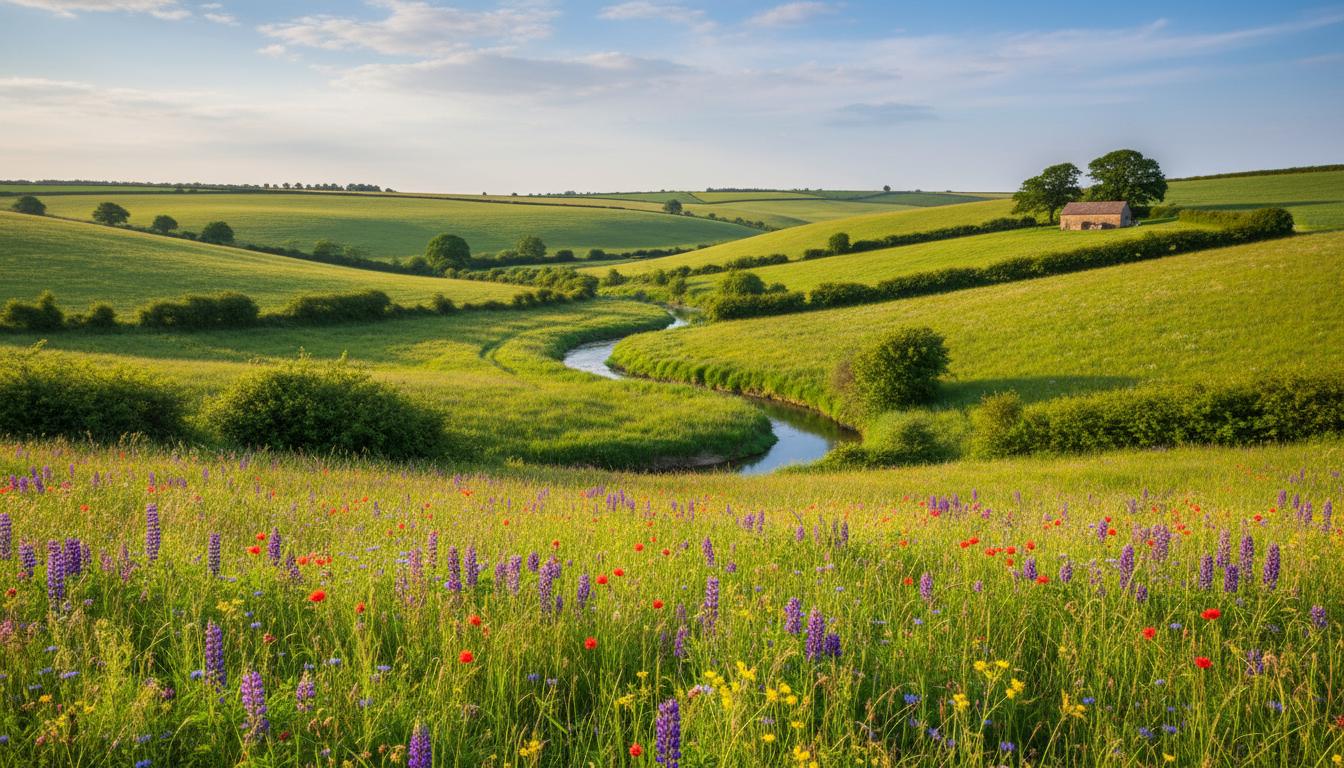
Dorset Area of Outstanding Natural Beauty
The entire Piddle Valley holds AONB status, equivalent to that of a National Park, reflecting its outstanding landscape quality.
The Land
Features of Our Farm
Chalk Downland Pastures
Our grazing land sits on the chalk geology that defines the Dorset downs. These thin, alkaline soils produce grasses rich in minerals, contributing to both animal health and milk quality.
Watercourses & Wetlands
The Piddle Valley is named for the River Piddle, a chalk stream that rises at Alton Pancras and flows to Poole Harbour. We manage our land to protect water quality and support aquatic habitats.
Hedgerows & Field Boundaries
The traditional hedgerows and dry stone walls that define our fields are essential features of the Dorset landscape, providing wildlife corridors and shelter for livestock.
How We Farm
Our Farming Practices
Pasture-Based Grazing
Our livestock spend the majority of the year grazing on open pasture. This practice is central to animal welfare and land management, helping maintain the chalk grassland habitat.
Traditional Crop Rotation
Where we cultivate arable crops, we follow traditional rotation systems that maintain soil fertility without heavy reliance on synthetic inputs.
Hedgerow & Habitat Management
Our hedgerows are managed on a rotation cycle that ensures they remain healthy, dense, and productive for wildlife.
Water Stewardship
The chalk streams of the Piddle Valley are among England's most precious freshwater habitats. We maintain riparian buffer zones and manage slurry to prevent runoff.